
A wire rock retaining wall, or gabion wall, is a retaining structure using wire mesh baskets filled with rocks. These versatile walls blend function with natural aesthetics, providing excellent drainage and adapting to ground movement without cracking.
Key Components of a Wire Rock Retaining Wall:
Primary Benefits:
From residential gardens to commercial erosion control, gabion walls offer a practical, visually appealing solution. Their permeability allows water to flow through while maintaining structural integrity, making them ideal for areas with drainage concerns.
As Scott McLeod, owner of McLeod Landscaping, I’ve spent over 30 years installing wire rock retaining wall systems in the Merrimack Valley. Our team understands the critical foundation and drainage needs that ensure these structures perform reliably for decades.
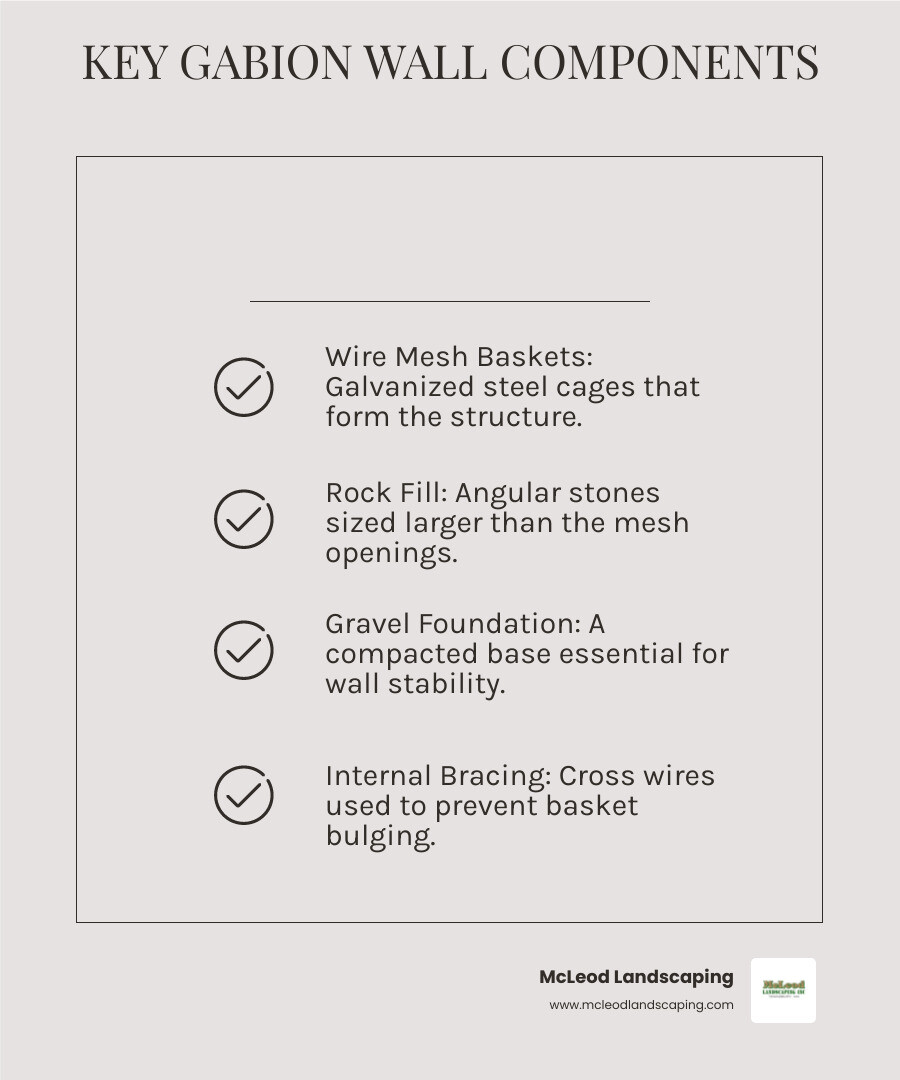
Wire rock retaining wall basics:
A wire rock retaining wall, or gabion wall, has ancient roots. The name comes from the Italian “gabbione,” meaning “large cage.” These structures are sturdy wire baskets, typically made from galvanized steel, filled with rocks or recycled concrete, relying on gravity for strength.
What makes gabion walls special is their flexibility. Unlike rigid concrete walls that crack from ground shifts common in New England’s freeze-thaw cycles, a wire rock retaining wall can adapt and settle gracefully. This flexibility makes them excellent for erosion control, as they can conform to slopes and riverbanks while allowing water to flow through the rock fill. This permeability prevents water pressure buildup, a common cause of failure in traditional retaining walls.
If you’re curious about the history and uses of gabions, Gabions on Wikimedia Commons offers a wealth of information.
When clients ask why they should consider a gabion wall, we highlight these key advantages:
Gabion walls aren’t perfect for every situation. Their bulky appearance can overwhelm smaller spaces, and the installation is labor-intensive. Without proper internal bracing, there’s a risk of bulging. Finally, their rustic look is a matter of personal taste; what one person finds charming, another may find too industrial.
A successful wire rock retaining wall begins with a thorough site assessment. Understanding your soil type and stability is the first step, as it dictates foundation requirements. Clay and sandy soils behave differently and present unique challenges.
Drainage planning is also critical. We analyze how subsurface water moves around and beneath the structure to prevent future problems. The wall’s height and scale determine the basket size and whether professional engineering is needed. Local building codes are in place for safety; walls over 3-4 feet typically require permits and engineered plans. It’s always best to sort this out upfront.
These technical details are what separate a long-lasting wall from one that fails prematurely.
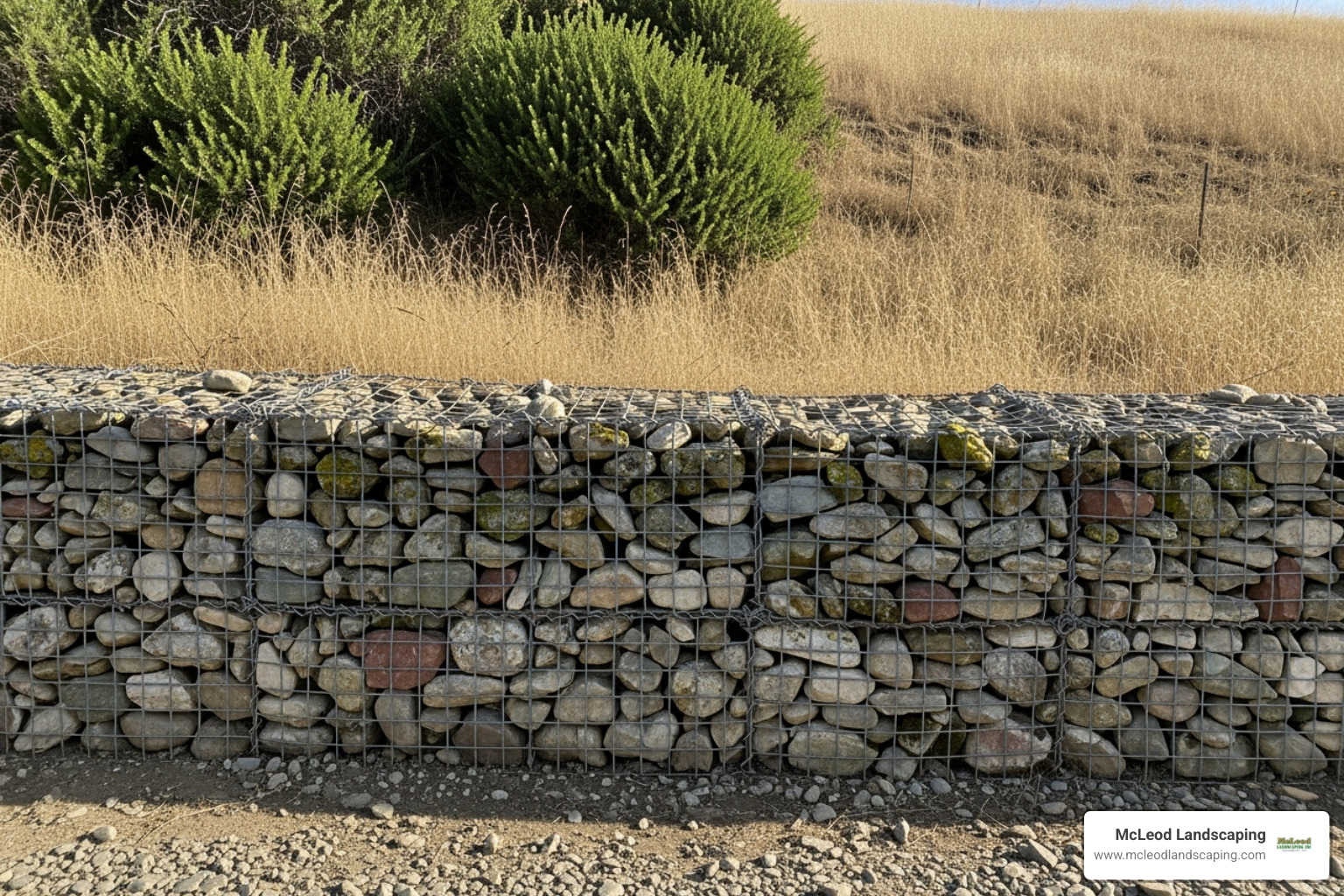
Material selection is critical to your project’s success.
Gabion Baskets
Fill Materials
While small, decorative gabions can be a DIY project, building a structural wire rock retaining wall is a job for professionals. The weight, precision, and engineering involved require expertise to ensure long-term stability and safety. At McLeod Landscaping, safety is our top priority throughout the process.
The foundation is the most critical part of your wire rock retaining wall. An improper foundation can lead to settling, bulging, or complete failure.
Our walkway installation services ensure all hardscape elements integrate seamlessly with proper drainage.
Modern gabion baskets arrive flat-packed and are assembled on-site.
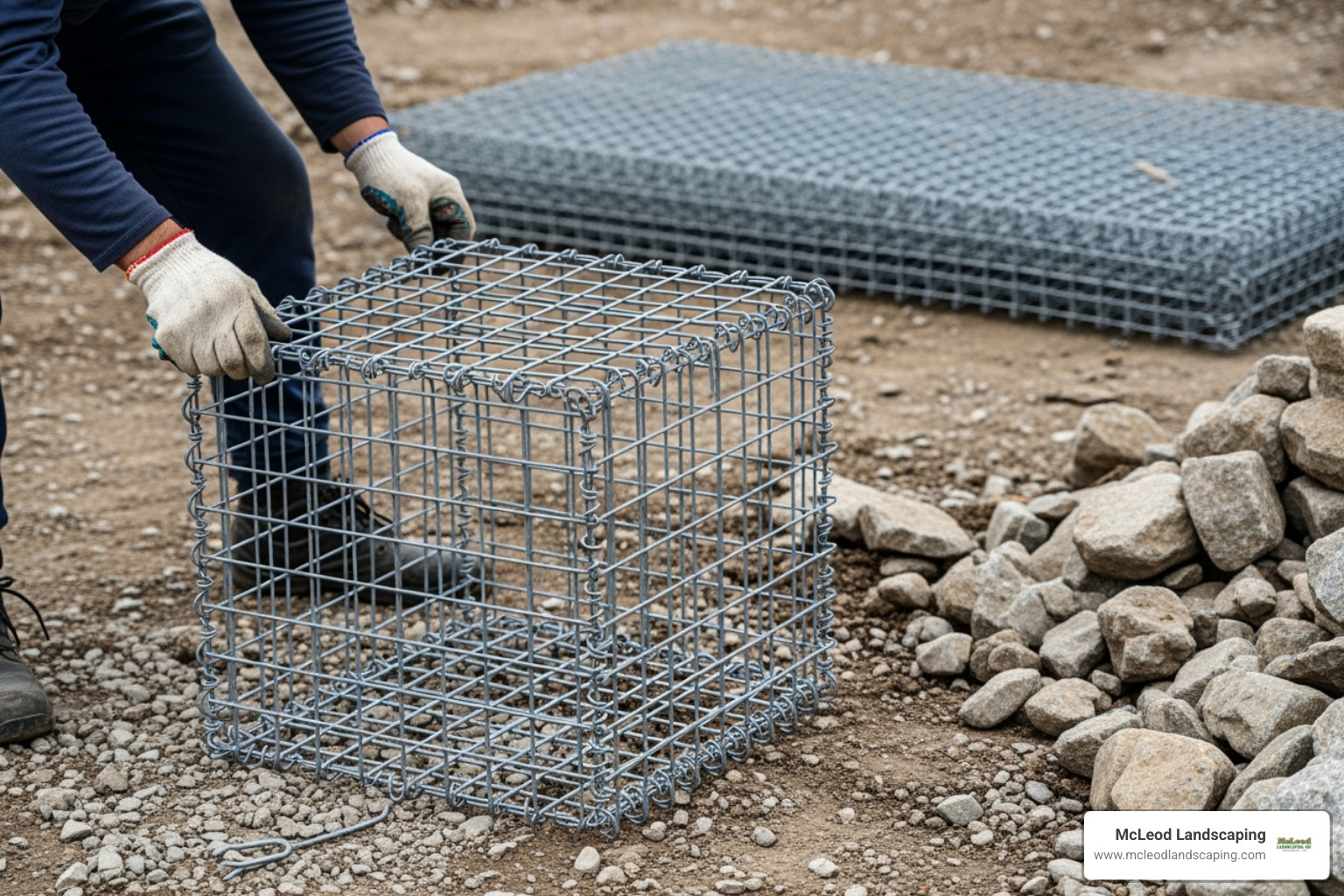
This is where attention to detail is crucial for both appearance and structural integrity.
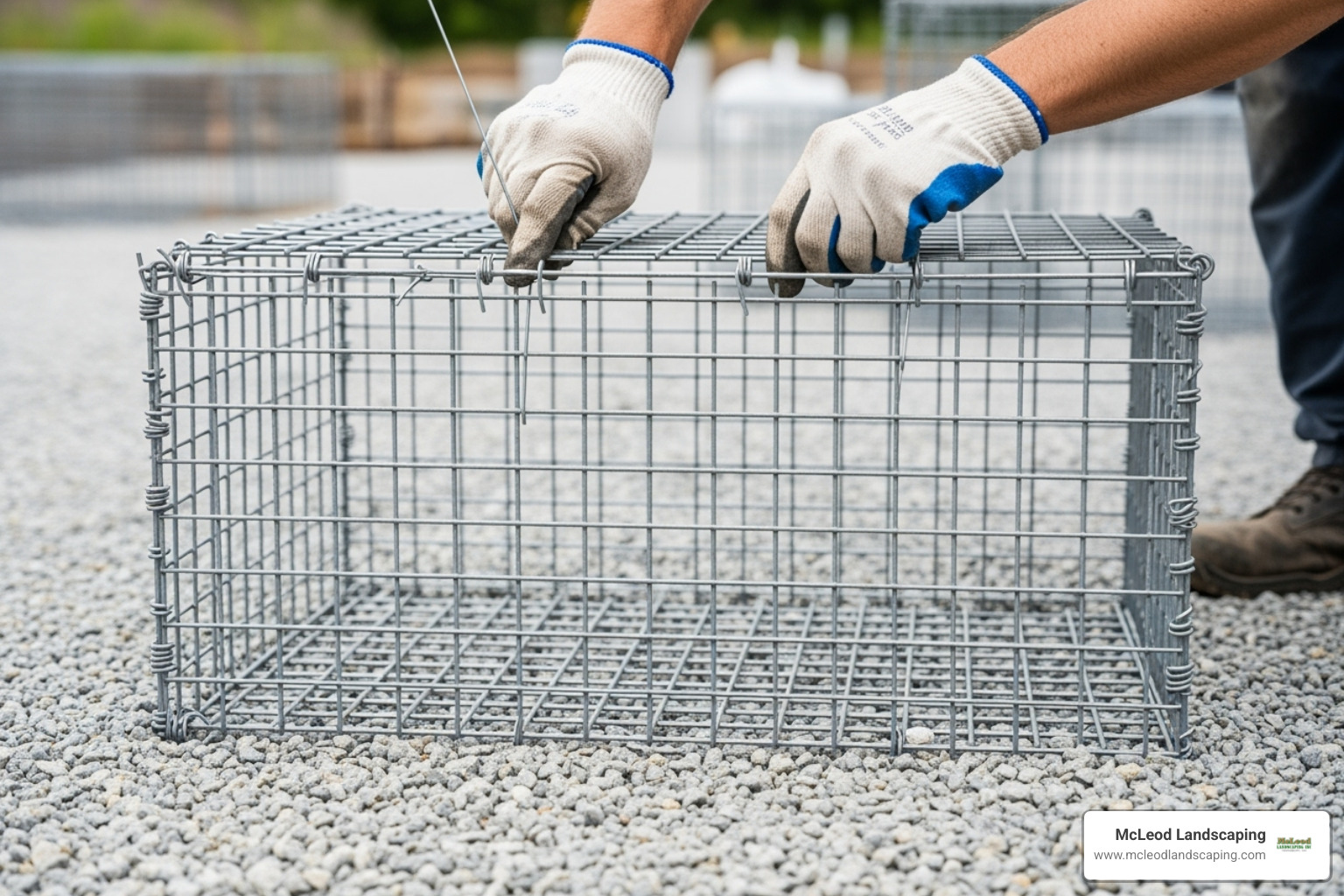
Building up the wall involves repeating the process while maintaining structural integrity.
Understanding the cost and long-term care of a wire rock retaining wall highlights its excellent value. These structures offer an impressive lifespan with minimal upkeep.
Several factors impact the final cost: basket size and quality, choice of fill material, wall dimensions, and site accessibility, which affects labor. Material costs for gabion baskets typically range from $50 to $750+ per unit based on internet data, reflecting differences in size and quality. Using local or recycled fill materials can offer significant savings.
Labor costs vary with complexity. While small projects may be DIY-friendly, structural walls require professional installation to ensure safety and longevity. The following estimates are based on internet data, not actual McLeod Landscaping costs, which are customized per project.
| Retaining Wall Type | Estimated Cost/Sq. Ft. (Internet Data) | Lifespan | DIY-Friendliness |
|---|---|---|---|
| Gabion Wall | $10 – $100+ | 50-100+ years | Small/Decorative: Yes; Structural: No |
| Pressure-Treated Lumber | $15 – $50+ | 10-20 years | Yes, for small walls |
| Segmental Block (SRW) | $20 – $70+ | 40-75 years | Moderate, for smaller walls; Professional for tall |
| Poured Concrete | $30 – $150+ | 50-100+ years | No |
| Dry Stack Stone | $20 – $100+ | 100+ years | No, requires specialized skill |
| Boulder Wall | $25 – $80+ | 100+ years | No, requires heavy equipment |
Note: All pricing is based on general internet data and not actual costs for McLeod Landscaping. Project costs vary widely based on specific site conditions, material choices, and design complexity.
Gabion walls are built to last 50 to 100+ years with minimal fuss. Longevity depends on the wire mesh quality; high-quality galvanized wire offers decades of service, while PVC-coated or stainless steel options last even longer. Unlike timber that rots or concrete that cracks, gabions flex with the ground and are immune to the freeze-thaw damage common in New England.
Maintenance is minimal: no staining or sealing is needed. Periodic inspections for wire damage and cleaning away surface debris are all that’s required.
The versatility of gabions makes them useful for many projects:
Here are answers to the most common questions we get about wire rock retaining walls.
The lifespan of a gabion wall depends on the quality of its wire mesh. A well-built wall using standard galvanized steel baskets typically lasts 50 years or more. Upgrading to PVC-coated or stainless steel wire can extend that to 60+ years. The structure’s integrity is tied to the wire, as the rock fill is naturally resistant to decay. Investing in high-quality wire is crucial, especially in New England’s harsh climate.
Most likely, yes. Permit requirements depend on local regulations and wall height. As a general rule, any retaining wall over 3 to 4 feet tall requires a building permit and engineered plans. Some municipalities have stricter rules. Always check with your local building department before starting a project to ensure safety and avoid legal issues. We can help guide clients through this process.
Small, decorative gabion features like planters are great DIY projects. However, structural retaining walls, especially tall ones, are a different challenge. They require expertise in foundation preparation, soil mechanics, drainage design, and handling immense weight. An improperly built wire rock retaining wall can bulge, settle, or fail completely. For any wall over a few feet tall, we strongly recommend working with experienced professionals like our team at McLeod Landscaping to ensure the safety and long-term success of your project.
A wire rock retaining wall is a smart landscape investment, combining generational strength, damage-preventing permeability, and a lifespan of 50-100+ years with minimal upkeep. What truly sets gabion walls apart is their unique aesthetic. The natural variations in stone create a distinctive feature that improves with age, whether you prefer a modern or rustic look.
The choice between DIY and professional installation comes down to scale and safety. While small, decorative gabions are suitable for DIY, structural retaining walls over three feet tall require professional installation. This ensures safety and proper handling of soil mechanics, drainage, and building codes. An improperly built wall can fail, and managing materials weighing thousands of pounds requires the right equipment and experience.
For complex projects, partnering with experienced professionals like McLeod Landscaping ensures a successful result. With over 30 years of experience in the Merrimack Valley, we understand our region’s unique challenges. We handle everything from permits to final installation, giving you peace of mind and a wall that will stand strong for decades.
Your landscape deserves a solution that works as hard as it looks good. A properly installed wire rock retaining wall delivers exactly that.
For expert help with your retaining wall project, contact us today!
Contact McLeod Landscaping today at (978) 640-0957 or click here to schedule a consultation for retaining wall installation. Let our experienced team design and install a functional and visually appealing retaining wall that enhances your landscape.


1881 Main St Unit 1, Tewksbury, MA 01876