
Garden designs can transform any outdoor space into a beautiful and functional oasis. Whether you’re looking to maximize a small backyard, enhance your front yard’s curb appeal, or create a tranquil retreat, the right design can make all the difference.
We’ll cover:
I’m Scott McLeod, the owner of McLeod Landscaping Inc. With over three decades of experience in garden designs, I’m passionate about creating outdoor spaces that reflect personality and lifestyle. Your dream garden is just a few steps away.
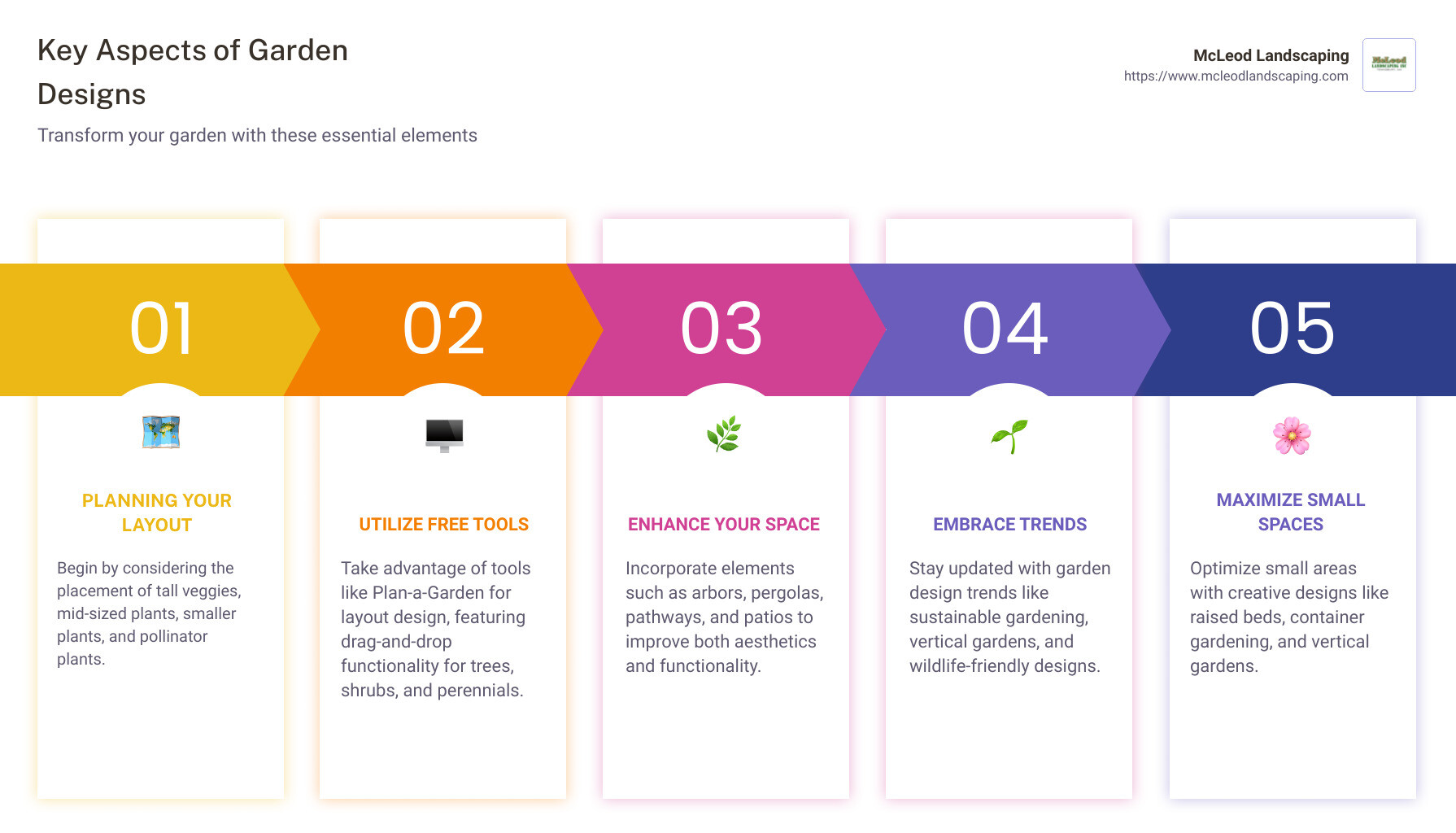
Creating a garden layout can feel overwhelming, but breaking it down by plant size and function makes it easier. Let’s dive into how to plan your garden with tall veggies, mid-sized plants, smaller plants, and pollinator plants.
Tall vegetables like corn, tomatoes, and sunflowers should be placed at the back or center of your garden, depending on your garden’s layout. This ensures they don’t shade smaller plants.
Example: In a rectangular garden, plant tall veggies along the northern edge to prevent them from blocking sunlight.
Mid-sized plants such as peppers, eggplants, and bush beans should be placed in the middle layer. These plants need moderate sunlight and won’t overshadow smaller plants.
Tip: Group mid-sized plants together to make watering and maintenance easier.
Smaller plants like lettuce, radishes, and herbs should be in the front or outer edges of your garden. These plants need less space and can benefit from the partial shade provided by taller plants.
Pro Tip: Use containers for smaller plants to create a flexible and movable garden layout.
Pollinator plants like lavender, marigolds, and zinnias are essential for attracting bees and butterflies. Place them strategically around your garden to ensure pollination of your veggies.
Case Study: According to Sean McMenemy, Director of Ark Wildlife, herbs like marjoram, sage, and chives are excellent for attracting pollinators while also being useful in the kitchen.

By organizing your garden with these plant categories in mind, you can create a balanced and productive garden space. Next, let’s explore some free tools for landscape design to help you visualize your perfect garden.
Creating a beautiful garden doesn’t have to be overwhelming. With free tools for landscape design, you can easily plan and visualize your dream garden. Let’s dive into some of the most helpful tools available.
Plan-a-Garden is a popular tool that lets you design your garden layout with ease. This tool offers a drag-and-drop functionality that allows you to place trees, shrubs, and perennials exactly where you want them.
Benefits:
– User-Friendly: Ideal for beginners.
– Customization: Choose from a wide variety of plants and garden features.
– Visualization: See your garden layout come to life before planting.
Example: Imagine placing a Japanese maple tree in the corner of your garden, surrounded by hydrangea shrubs and a border of lavender perennials. You can adjust their positions until you find the perfect arrangement.
The drag-and-drop functionality in these tools makes garden planning straightforward. Simply click on an element, drag it to your desired location, and drop it. This feature is particularly useful for adjusting the layout until it meets your vision.
Key Features:
– Flexibility: Easily move plants around.
– Experimentation: Try different layouts without any commitment.
– Accuracy: Plan the exact spacing and placement of each plant.
Tip: Use this feature to ensure that your tall trees don’t cast too much shade on your sun-loving perennials.
When using these free tools, include a variety of trees, shrubs, and perennials to create a balanced garden. Each type of plant plays a unique role in your garden’s ecosystem.
Trees:
– Provide shade and structure.
– Support wildlife.
– Examples: Oak, Maple, Birch.
Shrubs:
– Fill in gaps and add texture.
– Can be evergreen or deciduous.
– Examples: Boxwood, Hydrangea, Azalea.
Perennials:
– Offer seasonal color and blooms.
– Return year after year.
– Examples: Lavender, Coneflower, Hosta.
Case Study: In a garden designed by Charlotte Rowe, a swathe of Lavandula angustifolia ‘Munstead’ (lavender) was used along a path to provide fragrance and attract bees. This thoughtful placement of perennials not only enhanced the garden’s beauty but also supported local pollinators.
By utilizing these free tools for landscape design, you can create a garden layout that is both beautiful and functional. Next, we will explore innovative garden designs that can elevate your outdoor space.
Designing your garden isn’t just about aesthetics. It’s also about making sure your plants thrive. Let’s dive into some key elements that can help you create a productive and beautiful garden.
An arbor can serve as a grand entrance to your garden. It adds height and structure, making your garden feel more welcoming. Imagine walking through an arbor covered in climbing roses or wisteria. It not only looks stunning but also provides support for plants that need to climb.
A pergola offers shade and a sense of enclosure. It’s perfect for creating a cozy outdoor living room. According to designer Rebecca Smith, placing a pergola at the end of your garden can create a “destination” spot. You can also use it to screen unsightly views like a garage or shed.
Walkways guide visitors through your garden. They can be made from various materials like stone, brick, or gravel. Wide walkways are ideal for main paths, while narrower paths can lead to hidden garden nooks. Walkways also help in maintaining the garden by providing easy access to different areas.
Always consider the mature size of your plants. Planting too close can lead to overcrowding, which affects growth and health. For instance, shrubs like hydrangeas need space to spread out. If planted too close to other plants or structures, they can become a maintenance headache.
Pathway width is crucial for accessibility. Main pathways should be wide enough for two people to walk side by side—about 4-5 feet. Secondary pathways can be narrower, around 2-3 feet. This ensures that your garden is easy to navigate.
When planning your patio, think about how you’ll use the space. If you entertain often, you’ll need enough room for seating and a table. A good rule of thumb is to allow at least 3 feet of space around furniture for easy movement. Multi-functional furniture can also help maximize space.
Don’t forget to leave some open space in your garden. It provides a visual break and makes the garden feel larger. Open spaces can be used for lawns, simple ground covers, or even a small water feature. This balance between planted and open areas creates a more inviting and functional garden.
By incorporating these elements—arbor, pergola, walkway, mature plant size, pathway width, patio spacing, and open space—you can design a backyard garden that not only looks beautiful but also yields better harvests.
Next, let’s explore some simple yet beautiful garden enhancements to further elevate your outdoor space.
Enhancing your garden doesn’t have to be complicated. Small changes can make a big impact. Here are some simple yet beautiful garden designs to elevate your outdoor space.
Adding flowering plants can instantly brighten up any garden. Consider planting perennials like daylilies or lavender, which come back year after year. Annuals, such as marigolds or zinnias, are perfect for adding seasonal color.
“Plant roses among grasses and perennials, with the plan to let them intermingle,” suggests award-winning garden designer Colm Joseph. This approach not only looks natural but also ensures continuous blooms throughout the seasons.
Keeping weeds at bay is crucial for a tidy garden. Use mulch to suppress weed growth and retain moisture. Organic mulches like wood chips or straw are eco-friendly options.
Grouping plants by their needs—such as sunlight and water—makes maintenance easier. It also creates visual harmony. For instance, place sun-loving plants like coneflowers together, and shade-loving plants like hostas in another section.
Garden art adds personality and focal points to your space. Consider sculptures, birdbaths, or even a simple bench.
“A well-placed bench or water feature can turn an ordinary yard into a welcoming retreat,” notes McLeod Landscaping.
Pots are versatile and can be moved around easily. Use them to add height and variety. They are perfect for herbs, small shrubs, or even vegetables.
“You can grow enough in a container like the one above, in a window planter or even indoors,” says Rachel Crow, garden editor at Homes & Gardens.
Edible flowers like nasturtiums or pansies add beauty and utility. They can be used in salads or as garnishes, making your garden both pretty and practical.
A diverse garden is more resilient. Mix different types of plants—flowers, shrubs, and grasses—to create a balanced ecosystem.
“Geranium ‘Rozanne’ covers the ground and keeps the weeds out, filling the gaps a workhorse of the mix,” shares Mandy Buckland. This approach ensures that your garden looks full and vibrant year-round.
Choose a color theme to create a cohesive look. Whether you prefer bold, bright colors or soft, pastel tones, sticking to a theme makes your garden look well-planned and elegant.
By incorporating these simple enhancements—flowering plants, weed control, plant grouping, garden art, pots, edible flowers, diversity and unity, and color themes—you can transform your garden into a beautiful and functional space.
Next, let’s dive into the garden design trends for 2024 to keep your outdoor space stylish and modern.
As we look ahead to 2024, several garden design trends are set to shape our outdoor spaces. These trends focus on sustainability, creativity, and harmony with nature. Let’s explore the key trends:
Sustainable gardening is all about working with nature. This trend emphasizes planting native species that thrive in your local climate, reducing the need for extra water and fertilizers. Marian Boswall, author of Sustainable Garden, suggests starting with trees, then adding hedges, shrubs, and climbers. Finish with herbaceous perennials and annuals for a layered, eco-friendly garden.
Vertical gardens are perfect for small spaces. They use walls or fences to grow plants vertically, saving ground space. Natasha Goodfellow, a gardening writer, notes that upright plants can make a small plot feel larger and more interesting. Living walls and terrace plantings are popular choices for adding greenery without taking up much room.
Eco-friendly garden designs are gaining popularity. These gardens use materials and practices that are kind to the environment. For example, using recycled materials for garden beds or choosing plants that require less water. This approach not only helps the planet but also creates a low-maintenance garden.
Container planting is versatile and ideal for any garden size. Pots and containers can be moved around to change the garden’s look or to protect plants from harsh weather. They are great for growing flowers, veggies, and even small trees. Container planting allows you to create a garden even in the smallest spaces.
Herb gardens are both beautiful and practical. Growing herbs like basil, rosemary, and thyme can spice up your cooking and add fragrance to your garden. Herb gardens can be planted in the ground, in raised beds, or in containers. They are easy to maintain and can be enjoyed year-round.
Creating a wildlife-friendly garden helps support local ecosystems. Planting flowers that attract bees, butterflies, and other pollinators ensures your garden is buzzing with life. Adding bird feeders, water sources, and native plants can turn your garden into a haven for wildlife. This trend not only benefits the environment but also makes your garden more lively and interesting.
By embracing these garden design trends—sustainable gardening, vertical gardens, eco-friendly options, container planting, herb gardens, and wildlife-friendly designs—you can create a modern, functional, and beautiful outdoor space.
Next, we’ll explore how to maximize small spaces with creative garden designs.
When space is limited, creativity is key. Here are some innovative garden designs to make the most of your small outdoor area.
Raised beds are perfect for small gardens. They allow you to control soil quality and drainage easily. Plus, they make gardening more accessible, reducing the need to bend over.
Tip: Use untreated wood or stone to build your raised beds. This ensures no harmful chemicals leach into your soil.
Container gardening is incredibly versatile. You can grow flowers, herbs, and even small vegetables in pots. Containers can be moved around to catch the best sunlight or to change the look of your garden.
Quote: “You can grow enough in a container like the one above, in a window planter or even indoors,” says Homes & Gardens‘ garden editor Rachel Crow.
When floor space is scarce, think up! Vertical gardens use wall-mounted planters, hanging baskets, or trellises to grow climbing plants like ivy, jasmine, or tomatoes.
Fact: Vertical gardening not only saves space but also adds height and vibrancy to your garden.
A tiered garden is an excellent way to maximize a small space. By creating different levels, you can plant a variety of species in a compact area. This design is great for adding depth and dimension to your garden.
Example: Use a combination of raised beds and vertical gardens to create a tiered effect.
Small gardens hold the most potential for power in the landscape. You can create a wild meadow or a woodland garden even in a confined space. By choosing native plants, you can support local wildlife and create a lush, natural environment.
Case Study: A homeowner transformed their small backyard into a wildflower meadow, attracting bees, butterflies, and birds.
Got a thin plot? Use narrow garden ideas like neat raised beds and layered planting. Planting trees to espalier is a clever way to create screening and plenty of greenery without letting branches protrude into narrow spaces.
Tip: Plant from tall to mid-height to low to make your flower beds pack a punch.
By incorporating these creative garden designs, you can transform even the smallest spaces into lush, functional, and beautiful gardens.
Next, we’ll explore how to incorporate McLeod Landscaping into your garden design.
At McLeod Landscaping, we offer a full range of services to transform your outdoor space. Whether you’re dreaming of a serene garden retreat or a functional outdoor living area, we have the expertise to make it happen. Our team handles everything from simple garden makeovers to complex hardscaping projects.
Our landscape design team combines creativity with technical know-how. As Louisa Bell MSGD puts it, “Most designers are ‘civil engineers’ with a love of plants.” This means we can solve site problems and implement cost-effective plans that fit your vision. Our designers work closely with you to understand your needs, ensuring a bespoke design that truly reflects your style.
Once your garden design is finalized, our skilled team takes over the installation process. We use high-quality materials and sustainable practices to create a landscape that is both beautiful and environmentally responsible. But our job doesn’t end there. We also offer ongoing maintenance to keep your garden looking its best year-round. As noted, “a garden is never finished—it evolves from season to season.” We’re here to help you enjoy that journey.
In addition to garden design and maintenance, McLeod Landscaping provides commercial snow management services. This ensures that your outdoor spaces remain safe and accessible during the winter months. Our team is equipped to handle everything from snow removal to ice management, making sure your property is well-maintained no matter the season.
By partnering with McLeod Landscaping, you can create an outdoor space that is not only aesthetically pleasing but also functional and sustainable. Contact us today to start your garden transformation.
Next, we’ll delve into the latest garden design trends for 2024.
Creating a beautiful garden is a journey, not a destination. From planning your layout to incorporating the latest trends, each step brings you closer to your dream outdoor space.
Successful garden designs blend aesthetics with functionality. Whether it’s adding a pergola for shade, planting bee-friendly flowers, or designing a cozy firepit area, every detail counts.
At McLeod Landscaping, we specialize in transforming gardens of all sizes. Our expertise in landscape design, installation, and maintenance ensures that your garden not only looks stunning but also thrives year-round.
Ready to elevate your outdoor space? Contact McLeod Landscaping today and let us help you bring your vision to life.
Contact McLeod Landscaping today at (978) 640-0957 or click here to schedule a consultation for retaining wall installation. Let our experienced team design and install a functional and visually appealing retaining wall that enhances your landscape.


1881 Main St Unit 1, Tewksbury, MA 01876