
If you’re considering upgrading your irrigation, installing an automatic sprinkler system can be a game-changer. Here’s why it matters:
Investing in an automatic sprinkler system offers numerous benefits. It conserves water by directing it precisely where it needs to go, minimizes manual labor, and ensures your property looks its best year-round.
I’m Scott McLeod, owner of McLeod Landscaping. With over 30 years of experience, I’ve seen how an automated irrigation system can transform landscapes.
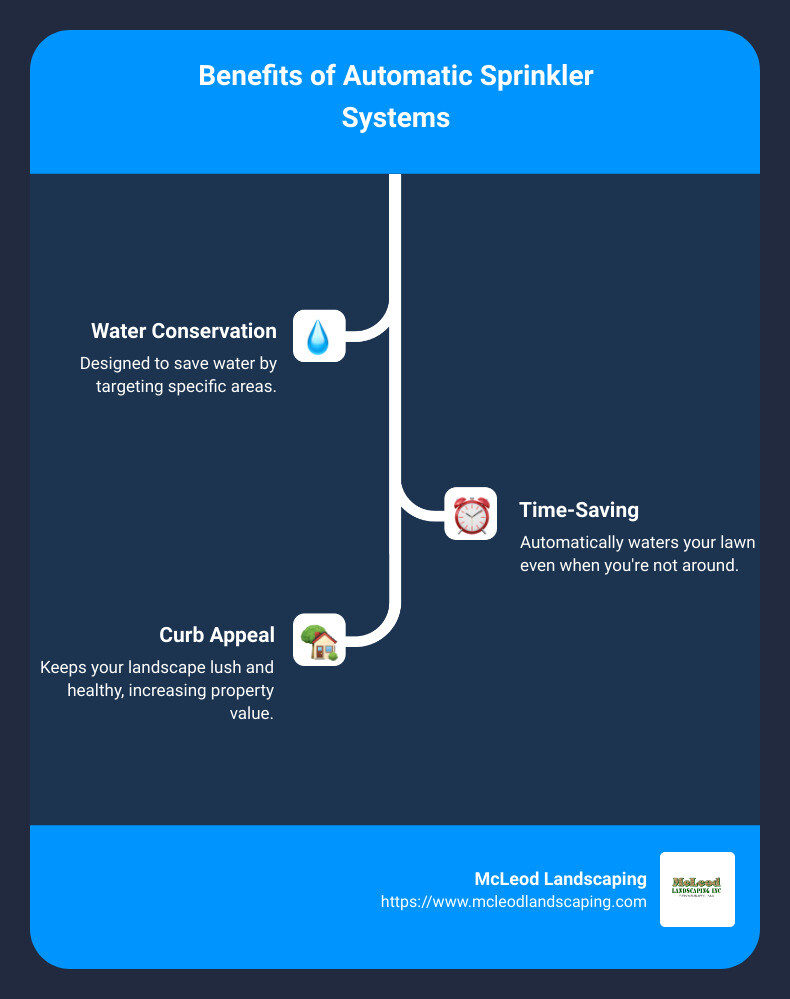
One of the biggest perks of installing an automatic sprinkler system is the ease of scheduling. Imagine never having to drag out the hose or remember to water your lawn. These systems can be programmed to water your lawn at optimal times, ensuring your plants get the right amount of water without any manual effort.
Scott McLeod from McLeod Landscaping notes, “With automated scheduling, you can set it and forget it. Your lawn will always look its best, even when you’re not around.”
Automatic sprinkler systems often come equipped with rain sensors. These smart devices detect when it has rained and adjust the watering schedule accordingly. This feature not only conserves water but also prevents overwatering, which can harm your plants.
According to a study by McLeod Landscaping, rain sensors can reduce water usage by up to 30%. This is a significant saving, both for your wallet and the environment.
A well-maintained lawn can significantly boost your property’s curb appeal and value. Real estate experts agree that a lush, green lawn makes a great first impression on potential buyers.
In fact, a Forbes article states, “A better cared-for yard can boost your home’s value when it’s time to sell.” Investing in an automatic sprinkler system can yield a high return on investment (ROI), making your home more attractive to buyers.

Manual watering can be time-consuming and labor-intensive, especially for larger yards. An automatic sprinkler system takes this chore off your hands, allowing you to spend more time enjoying your beautiful lawn rather than maintaining it.
Scott McLeod adds, “Our clients often tell us how much time they save with an automatic system. It’s a game-changer for busy homeowners.”
Next, we’ll discuss the costs associated with installing an automatic sprinkler system and why it’s a smart long-term investment.
Installing an automatic sprinkler system can be a significant investment, but it’s important to understand what you’re paying for. The cost can vary based on several factors, including the size of your yard, the type of system, and the number of zones needed.
Different types of sprinkler systems come with different price tags. Here’s a quick breakdown:
Sprinkler heads alone can range from $2 to $30 each, depending on the type and quality.
While the upfront costs might seem steep, an automatic sprinkler system offers long-term savings:
A client from Tewksbury, MA shared, “The initial cost was well worth it. Our water bills have decreased, and our lawn has never looked better.”
Next, we’ll explore the different types of automatic sprinkler systems and how they work.
When choosing an automatic sprinkler system, understand the different types available. Each type has unique features and benefits, making it suitable for specific needs and conditions. Let’s break down the four main types:
Wet pipe systems are the most common type of sprinkler system. They are simple and reliable because they always have water in the pipes. When a fire triggers the sprinkler head, water is immediately available to douse the flames.
Benefits:
– Immediate response: Water is always ready to be released.
– Low maintenance: Fewer components mean less can go wrong.
– Cost-effective: Generally cheaper to install and maintain.
Ideal for: Buildings where the temperature is consistently above freezing, such as homes and offices.
Dry pipe systems are designed for areas where pipes might freeze. Instead of water, the pipes are filled with pressurized air or nitrogen. When a sprinkler head activates, the air pressure drops, opening a valve that lets water flow into the pipes and out through the sprinkler heads.
Benefits:
– Freeze protection: Ideal for unheated spaces.
– Reduced water damage: Only the necessary amount of water is released.
Ideal for: Unheated buildings, parking garages, and outdoor canopies.
Pre-action systems are similar to dry pipe systems but with an added layer of security. They require a two-step process to activate. First, a fire detection system must sense a fire and open a valve, allowing water into the pipes. Then, the sprinkler head must be triggered to release the water.
Benefits:
– Double protection: Reduces the risk of accidental discharge.
– Targeted response: Only the affected area is activated.
Ideal for: Areas with sensitive equipment, like data centers and museums.
Deluge systems have open sprinkler heads and a dry pipe. When a fire detection system senses a fire, it opens a valve, and water floods the entire system, spraying from all sprinkler heads simultaneously.
Benefits:
– Rapid response: Quickly controls large fires.
– Complete coverage: Ensures water reaches all areas immediately.
Ideal for: High-hazard areas like chemical storage facilities and aircraft hangars.
Understanding these types can help you choose the right automatic sprinkler system for your needs. Whether you prioritize immediate response, freeze protection, or targeted activation, there’s a system that fits your requirements.
Next, we’ll delve into how these systems work, including the mechanics behind the sprinkler heads and distribution piping.
An automatic sprinkler system operates through an AES mechanism (Automatic Extinguishing System). This system is designed to detect and respond to fire without human intervention. Here’s a simple breakdown:
Sprinkler heads are crucial components. They come in various designs, each suited for different needs.
Fact: Only the sprinkler heads near the fire activate, minimizing water damage.
The water distribution system is like the veins in your body, delivering water to each sprinkler head.
Tip: Regularly inspect pipes for leaks and ensure valves are fully open to maintain optimal pressure.
Sprinkler heads are designed to activate at specific temperatures, typically between 135°F and 165°F (57°C to 74°C).
Example: A typical Early Suppression Fast Response (ESFR) sprinkler can discharge about 100 gallons per minute at 50 psi, quickly addressing the fire’s heat.
Understanding how these components work together helps you appreciate the efficiency and reliability of an automatic sprinkler system. Each part plays a vital role in ensuring your property is protected swiftly and effectively.
Next, we’ll explore the steps for planning and installing your automatic sprinkler system, from site assessment to choosing the right system.
Before installing an automatic sprinkler system, it’s crucial to conduct a thorough site assessment. This involves:
Based on your site assessment, you can choose the most suitable system for your needs. Here are some options:
Choosing between professional installation and a DIY approach depends on several factors:
For those looking for a tech-savvy option, B-hyve Smart Systems offer an excellent solution. These systems come with:
These smart systems can be controlled via a smartphone app, making it easy to manage your irrigation even when you’re not home.
By following these steps and choosing the right system, you can ensure your automatic sprinkler system is both effective and efficient, providing optimal care for your landscape.
Next, we’ll address some frequently asked questions about automatic sprinkler systems to help you make informed decisions.
Yes, an automatic sprinkler system can be very environmentally friendly. These systems are designed to use water efficiently, reducing waste and promoting conservation. Features like rain sensors ensure that the system only waters your lawn when necessary, preventing overwatering. According to McLeod Landscaping, smart irrigation systems can also adapt to weather conditions, further optimizing water usage.
Maintenance for an automatic sprinkler system is generally minimal but important for longevity and efficiency. Routine checks can help identify issues like clogged heads or leaks. According to McLeod Landscaping, common problems include misaligned heads and pressure issues, which can usually be resolved quickly. High-quality systems may last up to 20 years with proper care, although you might need to replace sprinkler heads every 10-15 years.
While it’s possible to install an automatic sprinkler system yourself, it can be complex and labor-intensive. You need to consider factors like water pressure, service line size, and proper zoning. In some areas, local regulations may require professional installation due to the plumbing work involved. According to Forbes, hiring a professional ensures that the system is set up correctly and efficiently. However, if you have DIY experience and your local regulations permit, you can attempt it yourself with careful planning and research.
Next, we’ll wrap up with the long-term benefits of installing an automatic sprinkler system and how McLeod Landscaping can assist you in achieving a lush, well-maintained landscape.
Installing an automatic sprinkler system offers numerous long-term benefits that make it a wise investment for any homeowner.
First and foremost, it saves time and effort. No more dragging hoses around or remembering to water your lawn. An automatic system takes care of it all, ensuring your landscape gets the right amount of water at the right time.
Another major benefit is water conservation. Modern systems, especially those equipped with rain sensors and weather-based controllers, optimize water usage. This means your lawn gets just what it needs without any waste. According to McLeod Landscaping, efficient water distribution minimizes wastage and promotes responsible water use, helping you reduce your environmental footprint.
Moreover, an automatic sprinkler system can increase your property’s value. A well-maintained lawn enhances curb appeal, making your home more attractive to potential buyers. As noted by Forbes, a better-cared-for yard can boost your home’s value significantly.
Lastly, the convenience and reliability of an automatic system mean fewer worries about your lawn’s health. Even if you’re away on vacation, your lawn stays lush and green.
At McLeod Landscaping, we specialize in installing and maintaining high-quality automatic sprinkler systems. Our team ensures that your system is tailored to meet the unique needs of your landscape. We use the latest technology to provide efficient and sustainable solutions.
Ready to transform your lawn into a thriving oasis? Contact McLeod Landscaping today to get started with your automatic sprinkler system installation. Let us help you achieve the lush, well-maintained landscape of your dreams.
Contact McLeod Landscaping today at (978) 640-0957 or click here to schedule a consultation for retaining wall installation. Let our experienced team design and install a functional and visually appealing retaining wall that enhances your landscape.


1881 Main St Unit 1, Tewksbury, MA 01876